Beauty and Wellness Business QuickBooks Cleanup The Texas ticket beside the federal one.
A Texas shop keeps a state sleeve next to the day sheet. The bottle, the chair, and the tip still have to land on different lines before that sleeve is filled.
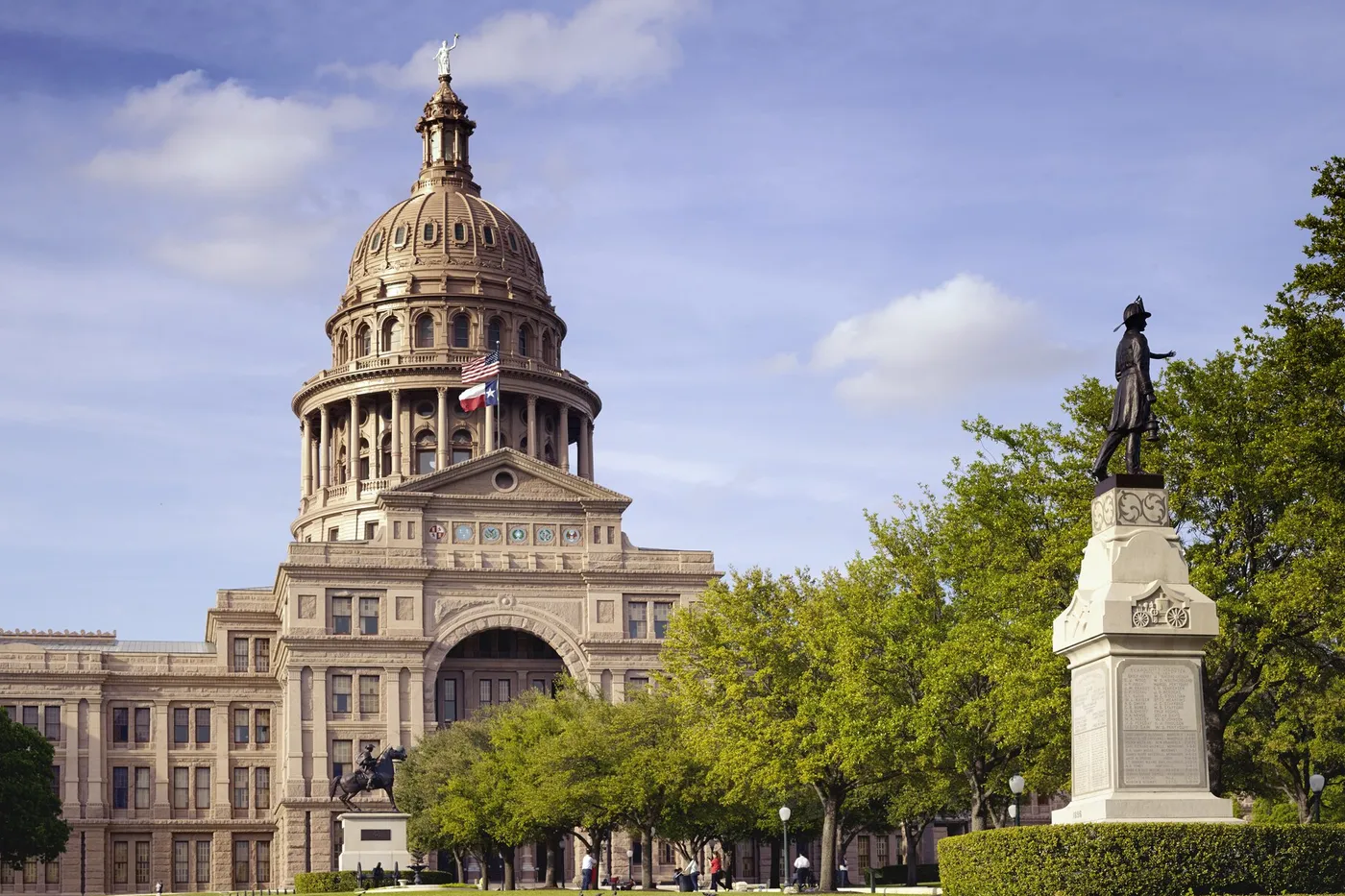
State capitol photograph by Carol M. Highsmith, public domain, Library of Congress.
Where the video starts.
The practice keeps its office in Dallas, so a shop owner anywhere in Texas meets that office on a video instead of driving the state. Houston, Austin, and every other Texas city are places we serve on the call. None of them is a second chair with our name on the door. The day sheet is what gets held up, the file is shared from the owner's side, and the month still closes on the same day it would close for a shop in any other state. When the room is outside Dallas and Fort Worth, the only hometown line we use is that we are all Texans, and then the talk goes back to the buttons. We will not invent a walk past the shop window. The screen the owner holds up to the camera is enough.
The person on the Dallas video is Steven Palmieri, in the Tax CFO role and in the Entrepreneur's CFO role for the shop. Reports on financial statements belong with a license holder. The work on this page is the ticket, the Texas sales return, and the privilege report those books can feed. An audit, a review, or a compilation is signed by a firm that does that work, and a shop cleanup does not sign it.
What the state taxes on a shop ticket.
On a Texas ticket, sales tax reaches most goods and only the services the state has listed. Of a taxable sale, 6.25 percent is the state piece. Local tax from a city, a county, or a transit district can stack as much as 2 percent onto that state piece, and the whole stack on one sale stops at 8.25 percent. When the guest is standing in the shop, the local piece generally follows that shop's place of business, and the owner looks the address up on the Comptroller rate locator the same day the sale rings. A city percent memorized on this page would go stale, so the locator stays the record.
Publication 94-183 is a school-sales pamphlet, and its example table is the Comptroller labeling shampoo, conditioner, and nail polish sold to a customer as taxable, while haircuts, shampoo services, manicures, and pedicures are labeled nontaxable. We read that table as a labeled example inside a school publication. We do not promote the pamphlet into a salon statute. A bottle that walks out in a bag is still an ordinary taxable good. In that same pamphlet a gift certificate draws no tax on the afternoon the guest pays for it, and the tax shows up when the shop redeems the certificate. That is the package shape from the national pages, moved onto a state line. Cash taken today is still a promise, and the taxable moment for a bottle hiding inside that promise waits until the guest carries the bottle home.
Publication 96-259 is the list of services Tax Code section 151.0101 taxes. Massage at a massage parlor sits on that list, and the publication treats a massage parlor as any business that provides massage for a fee. Massage given by a massage therapist who holds the state license is left off the list, and massage given by a physical therapist who holds the state license is left off it as well. A wellness room therefore keeps three piles in the item list. One pile is the retail bottle. A second pile is the therapist's own service. A third pile is any service the publication actually taxes. Paint on the door does not sort those piles. The button on the ticket does.
A bottle for the shelf can arrive without tax when the supplier takes a completed Form 01-339, the resale certificate, instead of the tax. Four years is how long that certificate has to live with the shop papers. Neither the permit number nor a copy of the permit can take the place of Form 01-339 in the supplier's file. Tax comes due later if that bottle is pumped into a service. The Comptroller tells the same story with a broom pulled from inventory so the store can be swept, and the tax then falls on the fair-market rental value for the time of that use, or on the purchase price, and the amount lands on the taxable-purchases line. In a shop the matching moment is the bottle opened at the bowl. The bowl does not get a rate of its own. The taxable-purchases line borrows the broom's math. The bag pile and the bowl pile are what give the line a number. When the owner is unsure the bottles will be resold, the certificate stays in the drawer. A mixed delivery marks which units are headed for the shelf and which units are headed for the bowl.
When the shop's sales return has to leave.
A shop on a monthly sales filing puts the return in by the twentieth of the month after the sales. A shop on a four-times-a-year filing keeps four dates beside the appointment book, and those dates are the twentieth of April, the twentieth of July, the twentieth of October, and the twentieth of January. The day sheet is what keeps those returns honest. Service, retail, tips, and booth rent have to sit apart before anyone copies a total onto the return. A bank rule that dumps the whole card batch into one income account will drag tips and fees into the sales figure the state is asked to trust.
Pay the sales tax with the report, on time, and the shop may keep 0.5 percent of that tax as the timely discount. Prepay the sales tax and the shop may keep that 0.5 percent and also a further 1.25 percent that belongs only to the prepayment. Miss the sales report's day and the report costs 50 dollars. A month or less of lateness on the sales tax adds a 5 percent piece, and lateness past that month adds a 10 percent piece. The sales-tax interest clock starts on day 61 after the due date, and the percent on that clock lives on the Comptroller interest page rather than being frozen here.
Stay under 500,000 dollars of Texas revenue across the prior 12 calendar months and a remote seller has a safe harbor that skips use-tax collection. Sales a marketplace handled still count toward that 500,000 dollars, including the months when the marketplace was the collector. Bottles sold only through a marketplace, by someone who lives in Texas, still need a permit. Living in the state is physical presence, even when the marketplace is the one collecting. A shop that also has a chair in Texas is already past that remote-seller question, since its own counter is a place of business. Gross-receipt records stay at least four years, the same span the resale certificates have to survive.
The privilege report a shop company still owes.
Texas franchise tax is the yearly price of doing business as a company in this state. Publication 98-806 is where the Comptroller names who files, and that list includes limited liability companies with one owner, series companies, and S corporations. No company in the picture, and no single-member limited liability company either, usually means this privilege report never shows up in the year. Rule 3.586 is the examples page that publication points to when a reader needs to see what "doing business in Texas" covers. The report enters a shop owner's year when the company is formed. Renting a chair inside someone else's room does not, on its own, answer whether a company exists.
Margin is the base, unless the company qualifies and picks the EZ computation instead. Publication 98-806 gives four margin computations, and a shop reads them against the ticket. The first computation keeps 70 percent of total revenue and lets the other 30 percent fall away. The second computation takes the allowed cost of the bottles off total revenue, and a shop that sells chair time more than bottles will often find that second computation empty, with the industry exceptions written in section 171.1012. The third computation takes compensation off total revenue before any rate is applied. The fourth computation takes one million dollars off total revenue, and that million-dollar subtraction has been available since the start of 2014. Section 171.1011 is the only list of exclusions taken off the federal revenue figures before this report calls the remainder total revenue. Pay that left on a W-2 can sit in the compensation subtraction. Cash that reached officers, directors, owners, partners, and employees can sit there too. A human owner who took net distributive income may add that income until the cap for that one person is reached. Certain benefits may come in as well, because the statute allows them. Workers' compensation is one. Health care is another. Retirement is a third. A stylist paid with a 1099 never enters that subtraction. The employer share of payroll tax the shop sent in never enters it either. A booth renter paid on a 1099 is one of those excluded costs. Texas gross receipts are the slice that carries the finished margin into this state.
On a 2026 report or a 2027 report, annualized total revenue at or under 2,650,000 dollars means no franchise tax and no long tax report. Even with the long report off the table, a short public page or an ownership page still has to go in. Only the Comptroller's skip list takes that short page away. Leaving it unfiled can cost the company the right to keep doing business in Texas. Retail and wholesale, on the franchise home page for 2026 and for 2027, sit at 0.375 percent. A shop the page treats as something other than retail or wholesale sits at 0.75 percent for those same years. A shop that rings both chair time and bottles has to read which of those boxes its own facts fit. The retail box and the other box are the owner's call after that reading, and these sentences stop short of the call. One person's compensation on a 2026 or 2027 report stops counting at 480,000 dollars, and wages past that line stay out of the subtraction. The EZ computation opens when annualized total revenue is 20 million dollars or less, the EZ rate is 0.331 percent, and picking EZ means the margin subtractions are given up.
The 2024 and 2025 reports use a different pair of dollar lines. Look at 2024 and at 2025 and the no-tax threshold reads 2,470,000 dollars, while the cap on one person's pay reads 450,000 dollars. The retail rate, the rate for other businesses, and the EZ threshold printed on the Comptroller page are the same as on the later reports. A line written for 2026 does not borrow the 2024 dollar figure, and a line written for 2024 does not borrow the 2026 dollar figure.
The ownership page a stranger can look up is numbered 05-102. Use that number when the shop's company is a corporation, a limited liability company, a limited partnership, a professional association, or a financial institution, and the company was organized in Texas or it has nexus here. Every other taxable entity organized here, or with nexus here, files the page numbered 05-167, and the names on 05-167 stay off the public sheet. A combined group does not send one ownership page for everybody in the group. Every member organized in Texas, and every member with nexus, sends its own page. That page is still due in a year when revenue sits at or under the no-tax line. The Comptroller page names who skips both reports, among them exempt entities, passive entities, companies with no Texas organization and no Texas nexus, and qualifying new veteran-owned businesses during their first five years. The warning on that page for a missed filing cites Tax Code sections 171.251, 171.2515, 171.252, and 171.255. Forfeiture can take away a lawsuit in a Texas court, whether the company is bringing the case or answering it, and it can set certain debts on the officers, the directors, the partners, the members, or the owners themselves. Sections 171.259 and 171.260 keep those forfeiture rules off financial institutions.
The fifteenth of May, and the other fifteenth of May.
For a shop company the ordinary day of the annual privilege report is the fifteenth of May, and when that day lands on a weekend or a holiday the due date moves to the next business day. The ownership page rides that same privilege due date. The shop company picks the signer before the ownership page goes in. That signer is an officer or a director, unless the company has already named somebody else for the page. Officer names, once the page has been sent, sit still until the following year. An amended page is the exception, and only when there is an error or a critical need. The registered agent is a different stack of paper. That agent change goes to the Secretary of State on its own filing, and a new name written only on the privilege page leaves the agent filing undone.
Get the payment in by the original due date, or get a Comptroller form in by that same date, and a tentative extension can open. Two amounts generally do that job. One equals the entire prior-year tax. The other equals 90 percent of the tax this year's report will show. The full prior-year amount stays unavailable on the first annual report when the shop company only became subject to the tax during the year before. Shops that are not on mandatory electronic funds transfer ask through Webfile, or they send Form 05-164, and the fifteenth of November becomes the extended day. A company that paid 10,000 dollars or more during the previous state fiscal year pays by electronic funds transfer, gets a first extended day of the fifteenth of August, and can take a second extension out to the fifteenth of November. At 500,000 dollars or more paid in that prior year, the ask is a TEXNET payment that uses code 13080 and lands on time. Form 05-164 stays out of that ask. TEXNET prints the cutoff clock on the extensions page, and that printed clock is the one a large payment has to beat. Memory is the wrong place for that cutoff, so the clock stays on the extensions page. Once the company no longer has sufficient nexus, sixty days is the window for the final privilege report. A final report that has met the payment rules can stretch 45 days beyond the day it was first due.
Miss the privilege report's day and that report costs 50 dollars. Show up with the privilege tax during the first month it is late and the added piece is 5 percent of the tax. Show up after that first month and the added piece is 10 percent of the tax. Day 61 after the privilege due date is when interest on that tax begins, and the percent itself stays on the Comptroller interest page.
On the first of January 2026 the filing rules changed for a research-and-development credit tied to this privilege report. The Comptroller's franchise home page carries the link for that change. An owner who might claim the credit follows that link for the year in question, and this page does not retell the credit.
A second fifteenth of May sits beside the privilege date and is easy to mix up with it. Chairs, dryers, and the bottles still on the shelf go to the county appraisal district on a rendition of what the shop owned and used to produce income on the first of January. That rendition's ordinary day is the fifteenth of April. Ask in writing and the district can slide the rendition from the April date onto the fifteenth of May. Send the rendition late and the district can add a penalty of 10 percent of the property tax owed on those chairs, dryers, and shelf bottles. The appraisal fifteenth and the privilege fifteenth belong on the same wall as two different errands, so one stamp does not get mistaken for the other.
A constructed shop, with the dollars left blank.
What follows is a constructed hypothetical, with no client behind it and no return this practice has prepared. Picture a Texas shop company on a 2026 report whose annualized total revenue sits at or under 2,650,000 dollars. That company files the short ownership page. The long privilege-tax report stays off the stack, unless the skip list already covers the company. The day sheet still separates the chair, the bottle that left in a bag, the tip, and any booth rent received, because the sales return and the shelf count need that split even in a year when the privilege tax itself is zero. No dollar from a real guest is used in that sketch. If your Tuesday has a renter, an employee, and a bottle sale in the same hour, the form below can say so in one sentence. Dollar figures from the shop stay off this note until both sides have signed a letter.
The national pages stay with the file, the button, the day sheet, and the federal dates that do not change with the state. This page is the sleeve that holds the Comptroller lines. Both can stay open on the same call.
Name the Texas line on the ticket.
Name the state page that is still open, or say the sleeve is empty. Leave the password off.

You will be talking to the Steven Palmieri practice.