Beauty and Wellness Business QuickBooks Cleanup Rent received is not a wage.
Three people can stand in one room and the file still owes each of them a different kind of line.
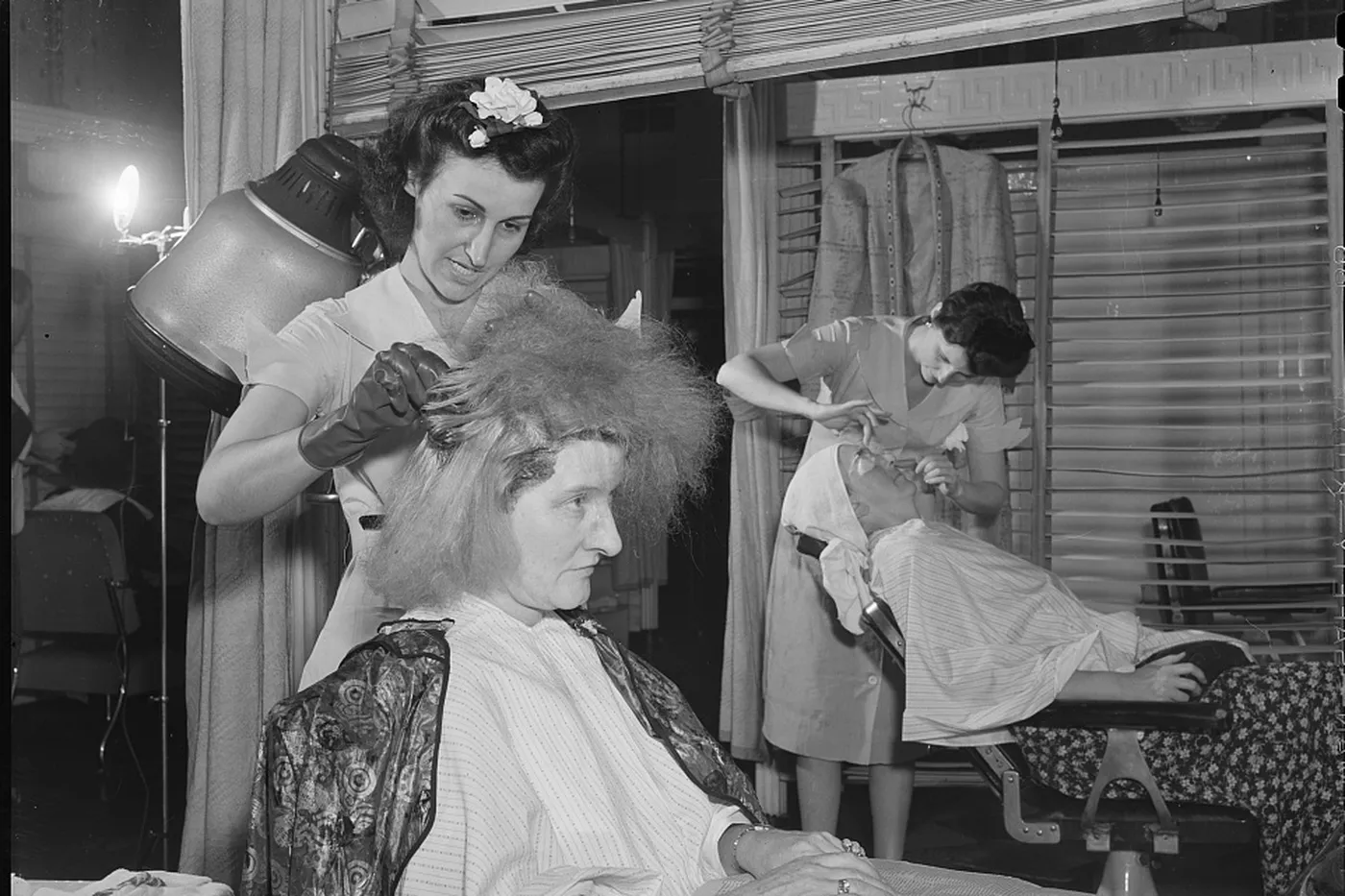
Workroom photograph, Library of Congress, Farm Security Administration, public domain, item 2017835363.
Three ways the money moves.
In a true booth rental, the stylist pays the shop for the chair and keeps the service money. The shop's income is rent. The stylist's clients are not the shop's sales. Product the shop sells from its own shelf is still the shop's product. Product the stylist sells from a personal stash is not, unless the shop is the one collecting it.
A commission stylist is a second pattern. The shop collects from the guest and pays the stylist a share. That share is wages or nonemployee compensation. The word booth on a lease does not decide it. The IRS worker test decides it, from who controls the work, who sets the hours, and who carries the risk. We do not rename the payment to make a form easier.
An employee is the third pattern. The shop runs payday through a provider. We set up the wage, the tip path, and the deposits. The provider runs the payday. Tips the employee reports are part of that setup. They are not a second set of books on a napkin.
What the information returns ask.
For payments made in 2026, nonemployee compensation of two thousand dollars or more is reported on Form 1099-NEC. Rent of two thousand dollars or more is reported on Form 1099-MISC. The threshold for payments made before 2026 was six hundred dollars. A shop that pays a stylist has to know which form matches the payment.
A shop that only receives booth rent is the recipient, not the filer of that rent form. The stylist who pays the rent may be the one with the filing, if the amount crosses the line. Putting the shop on the filer side of rent it received reverses the story and invents income that was already recorded as rent, or worse, hides the rent entirely.
We set the chart so rent received has its own income row. We do not drop it into service income to make the month look like more haircuts. A lender who later reads the statements deserves the rent named as rent.
When all three share a Tuesday.
Many shops have all three on the same afternoon. An employee at the first chair, a renter at the second, a commission stylist on Saturday. The front screen does not care. It will ring whatever button is handy. The cleanup is a map of who kept the guest's money. If the shop kept it, it is sales, and the pay that leaves later is wages or nonemployee pay. If the stylist kept it and paid the shop for the chair, the shop records rent and does not record the guest's service.
A renter, a commission stylist, and an employee are three federal answers, and the town on the appointment book does not pick among them. The lines in the file are the same lines wherever the chair sits.
Payroll setup stops where the provider starts. We do not run the payday, and we do not take the login for the provider into a public form. If the honest answer is that the worker's status needs a lawyer or a firm that signs a report, we say so. Signed audits, reviews, and compilations sit outside this practice, and the disclosures page is where that refusal is written.
A week the map is wrong.
The painful week is the one where a renter was paid like an employee, or an employee was treated like a renter, for months. Payroll tax, the information return, and the shop's own income can all be wrong together. We do not unwind that in a slogan. We list the pay dates, the amounts the shop kept, and the amounts the stylist kept, and we say what can still be corrected with the provider and what has to be disclosed as already filed.
Nothing on this page is a sample from a real shop. If your Tuesday has all three patterns, the form can say so in a sentence. The amounts wait.
Say who kept the money.
Name who kept the guest's money. That one fact is enough to begin.

You will be talking to the Steven Palmieri practice.